Animal Hair Salon Australia
- 3.8
- Rating
- 10.00M
- Installs
- Free
- Price

 Analysis by App-foxy
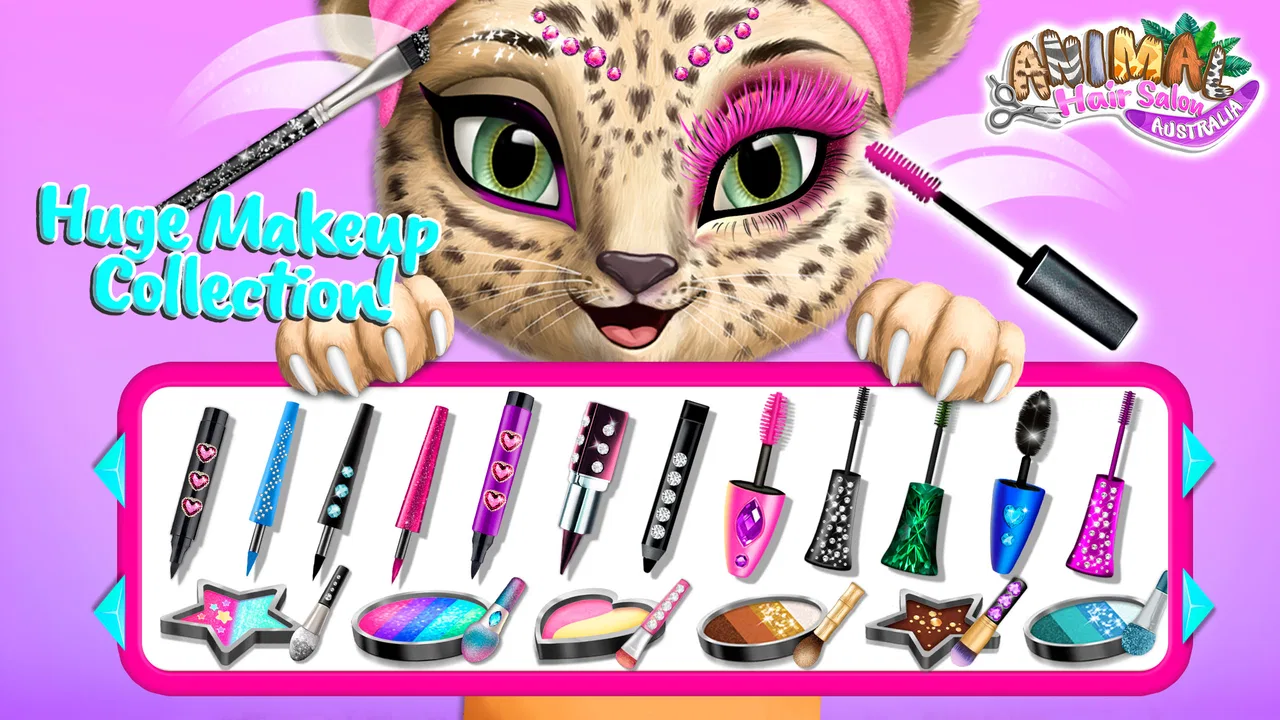
Animal Hair Salon Australia is the kind of educational game for children that turns a short wait, a quiet afternoon, or a shared parent-and-child moment into a playful styling session. I found its appeal immediately: instead of asking the player to read lengthy instructions or master complicated controls, it places the focus on caring for animal characters, creating hairstyles, and choosing outfits in a colorful salon setting. The experience is easy to approach, but it still gives children room to make decisions and see those decisions reflected on screen.
Developed by TutoTOONS, the game is free to start and is rated Everyone, which makes it a natural candidate for families looking for gentle entertainment. It has passed the ten-million-install mark, while its average rating sits at 3.8 from roughly forty-six thousand ratings. Those figures suggest a broad audience, although they also hint that the experience will not suit every child or every parent equally. My view is that it works best as a simple creative activity, not as a deep simulation or a traditional lesson-based game.
From the first tap to a finished salon look
I’d treat the first visit as a small creative project, not a race through every option. Starting with one animal and deciding what kind of look to create gives a new player an easy path to a finished result, while leaving room to experiment afterward. That first success also makes it clearer which choices are part of styling and which are simply there to explore.
You May Also Like

 Blood Strike: 2.5 Anniversary
Blood Strike’s Loadouts Turn Every Drop Into a Tactical Gamble
A close look at Blood Strike’s custom loadouts: how fast access to signature weapons reshapes its battle royale rhythm, rewards preparation, and narrows the gap between fights.

 Pandora - Music & Podcasts
Pandora’s Music Is Easy to Start, but Harder to Recover
Pandora’s strength is its low-effort path from a seed to a station. Its weak spot is how much confidence it asks you to place in connection, setup, and quiet recovery.

 8 Ball Pool
 Is Built on Rivalries, Rematches, and Routine
A close look at the rivalries, rematches, shared routines, and unanswered safety questions that turn a quick pool match into a persistent mobile community.

 Samsung Music
’s Quiet Strength Is Playing What You Already Own
Its reach comes less from spectacle than from dependable access to a personal library. That simplicity is both the app’s strongest retention engine and its ceiling.

 AccuWeather: Weather Radar
AccuWeather Review: A Quick, Clear Forecast for Everyday Decisions
For everyday plans, the best forecast is the one you can understand quickly. AccuWeather makes rain timing, radar, and local conditions easy to act on, with a few trade-offs.

 Hill Climb Racing
Why Hill Climb Racing Still Turns Crashes Into One More Run
A tiny car, a bumpy hill and one more upgrade: Hill Climb Racing keeps resurfacing because its simple chaos makes every near-miss feel personal.
More From Our News Desk



What to expect when you begin
The central idea is straightforward: animals visit a beauty salon, and the player helps style them. Hair choices and clothing choices provide the main creative direction, so the first session feels more like playing with a digital dress-up set than completing a demanding challenge. That distinction matters. Children who enjoy experimenting with colors, appearances, and character combinations will probably understand the appeal within minutes. Children who need a strong story, competitive goals, or constant novelty may find it less compelling.
I would introduce it as a game about making choices rather than getting answers right. There is no need to approach the salon with a perfect design in mind. A child can try a hairstyle, change the outfit, and see whether the result feels funny, cute, or simply different. That low-pressure structure is one of its strongest qualities because it makes the first meaningful success easy to reach: finishing a look that feels personally chosen.
The Australian setting gives the title its identity, but the practical appeal remains the salon activity itself. The game is especially suitable for younger players who are still becoming comfortable with touch controls. Tapping and dragging actions usually feel more understandable to a child than menus full of text, and the visual presentation helps keep attention on the character being styled. I still recommend that an adult sit nearby for the first session, not because the game is difficult, but because children may need help understanding what each icon changes.
Setting it up without turning it into a project
The game runs on devices using Android 6.0 or later. After installing it, I would begin with a short supervised session rather than handing over the device immediately. That gives the child a chance to see how the salon works and gives the adult a chance to notice which parts are free to use and which choices may lead toward optional purchases. The game itself is free, but its in-app purchase range runs from $3.99 to $159.99 per item, so family settings and supervision are sensible before a child starts exploring.
That price range is the main practical issue I would address before play. A child may understand that a button unlocks something without understanding that it involves real money. I would keep purchasing restricted through the device’s family controls and explain that not every visible option needs to be opened. This does not prevent the free part from being enjoyable; it simply keeps the session focused on play instead of unexpected checkout requests.
The version I reviewed is 8.1.10238. I would also make sure the device has enough battery and that the child is using a comfortable screen size. On a phone, small visual details can be harder for little fingers to target, while a tablet makes shared play easier. That is not a requirement for enjoying the game, but it affects how relaxed the first session feels, especially when an adult is helping without taking control away from the child.
How to reach the first successful action
My recommended first goal is not to explore every salon option. It is to complete one animal’s appearance from beginning to end. Let the child choose a hairstyle first, then pause and ask what kind of outfit would match it. This creates a small, understandable workflow: choose the hair, choose the clothes, look at the finished character, and decide whether to keep the combination or change it.
This approach works better than tapping everything quickly because it turns the game into a simple design exercise. A child can compare a playful hairstyle with a more coordinated outfit, or deliberately create a mismatched look for humor. The useful learning moment is the connection between choice and result. The player is not merely pressing buttons; they are forming an idea, testing it, and revising it.
I also like asking the child to describe the finished look in their own words. “What would you call this style?” or “Which part would you change?” encourages observation without making the activity feel like homework. For a preschooler, that can support vocabulary and decision-making. For an older child, it can become a quick exercise in color matching and personal taste. The game does not need to announce an educational objective for those conversations to happen naturally.
A useful trick is to make the first design intentionally simple. Choose one hairstyle and one outfit before experimenting with alternatives. If the child starts tapping through every option, the salon can become a stream of disconnected images rather than a creative task. Completing one coherent look first gives the player a clear sense of progress and makes later experimentation more meaningful.
Where new players may feel confused
The most likely confusion comes from interpreting decorative icons and interactive controls. Young players may not immediately know whether a symbol applies a change, moves to another part of the salon, or opens an optional item. I would let the child tap cautiously while explaining that it is fine to look around before choosing. If a control does not behave as expected, returning to the current character and focusing on the visible styling choices usually restores the sense of direction.
Another point of confusion is the difference between completing a look and unlocking every possible choice. The game can encourage children to keep browsing because more visual options are attractive. I would make the boundary clear: a finished outfit is already a successful result. This prevents the common mistake of treating locked or paid content as a requirement for enjoying the activity.
Children may also assume that a strange combination is a failure. I would encourage the opposite interpretation. A hairstyle that does not match an outfit can be changed, but it can also be kept as a funny experiment. That attitude is important because the salon works best when the child feels free to try things. If the player believes there is only one correct appearance, the creative part becomes much narrower.
Parents should expect the experience to be more visual than explanatory. If a child cannot read yet, that is helpful in some ways, but it also means an adult may need to translate what a button does through demonstration. I would show one action, then hand the device back rather than completing the entire character myself. The game is most rewarding when the child remains the person making the choices.
Small workflows that make the game more useful
One of my favorite ways to use the salon is as a short “before and after” activity. Ask the child to choose a starting style, make one deliberate change, and then compare the two versions. The point is not to judge which is prettier. It is to notice how a single hairstyle or outfit alters the character’s overall impression. This gives the session a beginning, a clear action, and an ending, which is useful when screen time needs to stay contained.
A second approach is to create a theme before opening the styling choices. The theme could be something as simple as “a rainy-day outfit,” “a party look,” or “the funniest combination.” I would avoid presenting this as a strict assignment. The value comes from giving the child a creative starting point, especially when too many choices feel overwhelming. Once the theme is selected, the player has a reason to compare options instead of tapping randomly.
A third practical tip is to use the game as a conversation starter between siblings or an adult and a child. Each person can suggest one element while the player makes the final decision. That keeps the child in control but adds social play to what could otherwise be a solitary activity. It is particularly effective during a short shared break because a complete look can be made without requiring a long campaign or complicated rules.
I would not use it as a substitute for a structured learning app. Its educational value comes through creativity, sequencing, language, and choice-making rather than lessons, quizzes, or visible academic progress. If your goal is early reading practice, mathematics, science content, or a carefully measured curriculum, a dedicated learning application will be a better match. This game offers an informal learning opportunity inside a beauty-salon theme.
How it compares with ordinary dress-up games
Compared with a basic dress-up app, the salon framing gives the activity a clearer routine. The child is not only arranging a static character; they are imagining a visit, making changes, and finishing a look. That context can help younger players stay engaged because each choice feels connected to the character’s makeover. The trade-off is that children who want unrestricted avatar customization may prefer a broader dress-up tool with fewer thematic boundaries.
Compared with a salon-management game, this title is much lighter. I would not choose it for someone who wants staffing, budgets, timed customers, or strategic progression. Its strength is immediate interaction, not running a business. That makes it easier for a first-time player, but it also means there is less complexity for older children who want a system to master over many sessions.
Compared with a traditional educational game, it is more open-ended and less demanding. There is no need to memorize facts or solve a sequence of increasingly difficult puzzles. That makes it a comfortable choice for relaxed play, but parents should judge it by the quality of its creative interaction rather than expecting formal instruction. In my experience, the right comparison is a digital craft activity with animal characters, not a classroom tool.
Who will enjoy it and who should skip it
I would recommend it to children who like animals, pretend play, clothing, and visual experimentation. It is also a good option for a parent who wants to sit beside a child and turn a few minutes of play into a conversation about choices and appearance. The Everyone rating supports its family-friendly positioning, while the simple salon concept makes the first session approachable for children who are not ready for complex game rules.
I would be more cautious about recommending it to older players who expect challenge, progression, or a substantial story. The same simplicity that helps a first-time user may feel limiting after the novelty of styling wears off. I would also skip it if your household prefers games with no purchase prompts at all, even when those prompts can be managed through device settings. The free entry point is convenient, but the optional purchase range deserves attention.
The rating of 3.8 is another reason to keep expectations balanced. It is not a sign that the game lacks value, but it does suggest that broad popularity does not guarantee universal satisfaction. Some families will appreciate the accessible creative play, while others may find the available variety or monetization approach less comfortable. I would treat it as a game to try with a child, not an automatic recommendation for every family.
What a good second session looks like
After the first completed look, I would give the child a small challenge: make two different styles for the same animal and explain how they differ. This avoids simply repeating the first session and encourages more purposeful choices. One style might be coordinated and calm, while the other is deliberately silly. The child learns that the same character can be imagined in more than one way.
If the child remains interested, let them lead the next session. Ask them to show you how to begin, where to find a hairstyle, and how they decide when the look is finished. This is a surprisingly useful test of whether the controls make sense. It also reveals whether the game is holding attention because of genuine creative control or merely because the screen keeps presenting new visual options.
I would keep sessions flexible rather than trying to force a long play period. The game’s best moments are short bursts of making and comparing. Once the child begins repeating the same taps without making new decisions, it is a good time to stop or switch to another activity. Ending after a completed look leaves the experience feeling finished instead of abruptly interrupted.
My recommendation after using it
Animal Hair Salon Australia succeeds when it is treated as a cheerful, low-pressure styling activity for children. The path from installation to a meaningful result is reassuringly short: open the salon, choose a character, create a hairstyle, select an outfit, and talk about the finished appearance. That makes it easy to recommend for a first-time user who needs immediate feedback rather than a long tutorial.
Its limitations are just as clear. It is not a deep educational curriculum, not a strategic salon simulator, and not the best fit for families uncomfortable with optional purchases. The free game can still provide a pleasant creative session, but adults should manage purchases and help younger children understand that browsing is not the same as needing to unlock everything.
For my purposes, the strongest reason to try it is the way it turns simple styling choices into a shared activity. I would install it for a child who enjoys animal characters and imaginative dress-up, then start with one complete look instead of exploring every option at once. If that first success leads to conversation, experimentation, and a desire to create another style, the game is doing exactly what it needs to do. It is best enjoyed as a small creative salon visit, not as a game you must master.
With its free starting point, Everyone age rating, and support for Android 6.0 or later, it is easy to test in a family setting. TutoTOONS has built an approachable experience that can work well in short sessions, provided expectations remain realistic. I would recommend giving it a supervised try, especially when the goal is playful creativity rather than academic instruction or complex gameplay.
FAQs for Animal Hair Salon Australia
01What is Animal Hair Salon Australia, and how does it work?
Animal Hair Salon Australia is a fun and interactive app where players can style and care for various Australian animals. Users can wash, cut, and color the animals' hair, as well as choose outfits and accessories. The app encourages creativity and offers a playful way for children to engage with virtual pet grooming.
02Is Animal Hair Salon Australia suitable for young children?
Yes, Animal Hair Salon Australia is designed with young children in mind, featuring simple controls and vibrant animations. It promotes creativity and problem-solving skills. However, parental supervision is recommended, especially for in-app purchases or advertisements, to ensure a safe and enjoyable experience for kids.
03Does the app require an internet connection to play?
Animal Hair Salon Australia can be played offline, allowing users to enjoy the game without an internet connection. However, some features, such as updates or additional content, may require online access. It's best to check the app’s settings to understand which functionalities are available offline.
04Are there any in-app purchases or ads in Animal Hair Salon Australia?
The app offers in-app purchases, allowing users to unlock additional features or remove ads. While the basic version is free, these optional purchases can enhance the gaming experience. Ads are present in the free version, so parents may want to monitor their children’s interaction with the app.
05What devices are compatible with Animal Hair Salon Australia?
Animal Hair Salon Australia is compatible with most Android and iOS devices. It requires a certain version of the operating system, which is specified in the app store listings. Make sure to check the compatibility with your device to ensure smooth gameplay and access to all features.
Pros
- Engaging gameplay with colorful graphics.
- Variety of animals to style and groom.
- Simple controls suitable for all ages.
- Frequent updates with new features.
- Promotes creativity and imagination.
Cons
- In-app purchases can be pricey.
- Limited free content without buying.
- Ads can interrupt gameplay.
- May require internet connection.
- Some users report occasional bugs.

Animal Hair Salon Australia
Gallery